
What Does It Mean To Throw Spaghetti At The Wall?
An Informal English Expression Explained With Meaning, Usage, and Examples
Ok, so first things first. I’m not suggesting that you adopt ‘throwing spaghetti at the wall’ as an approach to learning English.
In today’s blog, we’re simply looking at this slightly confusing English expression, what it means, and how you might hear or use it in everyday conversation.
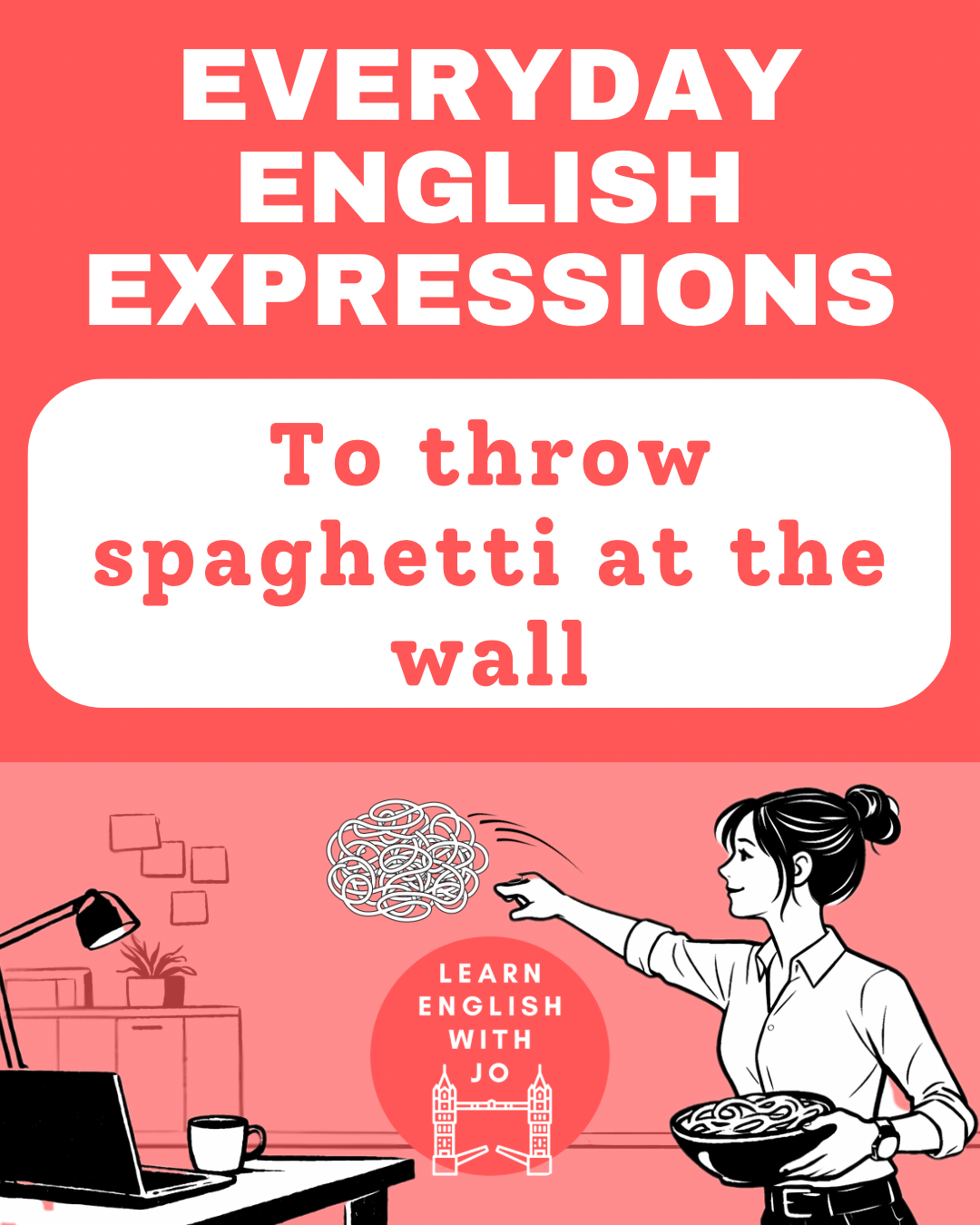
What does it mean to ‘throw spaghetti at the wall?’
So, what does it mean?
To throw spaghetti at the wall means to try lots of different ideas quickly, randomly and slightly chaotically to see what works. Some ideas will stick. Some will slide straight down and make a mess.
It’s not the most strategic or professional way of trialling things, but it does describe that phase where you’re trying something, anything really, rather than standing still.
You’ll often hear this expression when someone is talking about a period of uncertainty, experimentation, or early-stage decision-making.
Important bit! When should you not use it?
Because ‘throwing spaghetti at the wall’ is informal and slightly chaotic in tone, it’s best avoided in very formal or serious contexts.
You wouldn’t usually use it in academic writing, legal or official documents, or formal presentations where clarity and professionalism matter.
It’s also worth being careful when using it to describe someone else’s work, as it can sound critical or dismissive.
In short, it works well in relaxed, conversational situations, but less well when you need to sound precise, strategic, or highly professional.
Where does the expression come from?
The image is very literal. If you throw cooked spaghetti at a wall, some of it sticks and some of it falls off.
That slightly ridiculous mental picture is exactly why the expression works so well. It makes experimentation sound human and imperfect, rather than serious or over-engineered. There’s usually a hint of self-awareness when people use it, as if they’re admitting they don’t have a clear plan yet.
How people actually use it in conversation
This is an informal expression, and it’s mostly used in spoken English or relaxed writing.
Here are some common ways you’ll hear it used.
1. To describe a lack of clear strategy
At the moment it’s a bit of spaghetti at the wall.
We didn’t really have a plan. It was spaghetti at the wall in the early days.
2. To explain a period of testing or experimentation
We’re throwing spaghetti at the wall to see what sticks.
I’m just throwing spaghetti at the wall and seeing what gets a response.
3. To soften uncertainty or chaos
People often use this expression to make uncertainty feel more acceptable, or even slightly humorous.
Honestly, it’s spaghetti at the wall right now, but I’m learning a lot.
The first few months were very much spaghetti at the wall.
Realistic examples you might hear
Here are some more natural, real-life examples.
I’m throwing spaghetti at the wall with my job applications. I’m applying for different roles and seeing what comes back.
We tested a few different ideas. It was very much spaghetti at the wall at first.
The marketing was a bit chaotic in the beginning. Total spaghetti at the wall.
Those early conversations were spaghetti at the wall until we worked out what people actually wanted.

Similar expressions you might hear instead
There are a few other expressions people use to talk about the same idea.
to do something by trial and error
We did it by trial and error.to adopt a haphazard approach
At the beginning, we took a haphazard approach.to see what sticks
We’re trying a few things to see what sticks.to test the waters
I’m testing the waters before committing.to take a scattergun approach
This is more British and slightly more formal.
They took a scattergun approach at first.to wing it
We didn’t plan it properly. We just winged it.
When is it appropriate to use?
This expression works well in:
casual conversations
informal work discussions
interviews where you’re reflecting honestly
social media or blog writing
chats with colleagues or friends
So, is throwing spaghetti at the wall a good approach?
Well, it’s certainly one I recognise. It’s definitely one I feel like I often use on social media. Trying things out, seeing what gets a response, noticing what lands and what quietly disappears.
As an expression, it captures that stage perfectly. That slightly messy, slightly uncertain phase where you’re doing your best to move forward without pretending you’ve got it all worked out.