
8 Ways To Talk About Overwhelm in English
How To Talk About Feeling Overwhelmed
Sometimes, the world feels… a bit much.
If you’ve been following the news lately, you may have noticed that it can be hard to stay grounded. With ongoing stories from places like Ukraine, Gaza, Iran, the US, and beyond, many people are carrying a quiet emotional weight, even from a distance.
And for many English learners, this adds another layer.
You might feel something very strongly, but not quite know how to express it in English in a way that feels natural, calm, and human.
So in this post, I want to share a few gentle, everyday phrases you can use when the news feels overwhelming.
Not dramatic. Not overly formal.
Just the kind of language people really use when they’re trying to make sense of a heavy moment.
What does “overwhelmed” mean?
To feel overwhelmed means to feel emotionally or mentally overloaded.
It’s that feeling of having too much information, too much worry, or too much happening at once and not really knowing where to put it all.
Overwhelm can show up as:
tiredness
anxiety
distraction
numbness
a sense that you need to step back
And in today’s world, it often comes from the constant flow of news and updates.
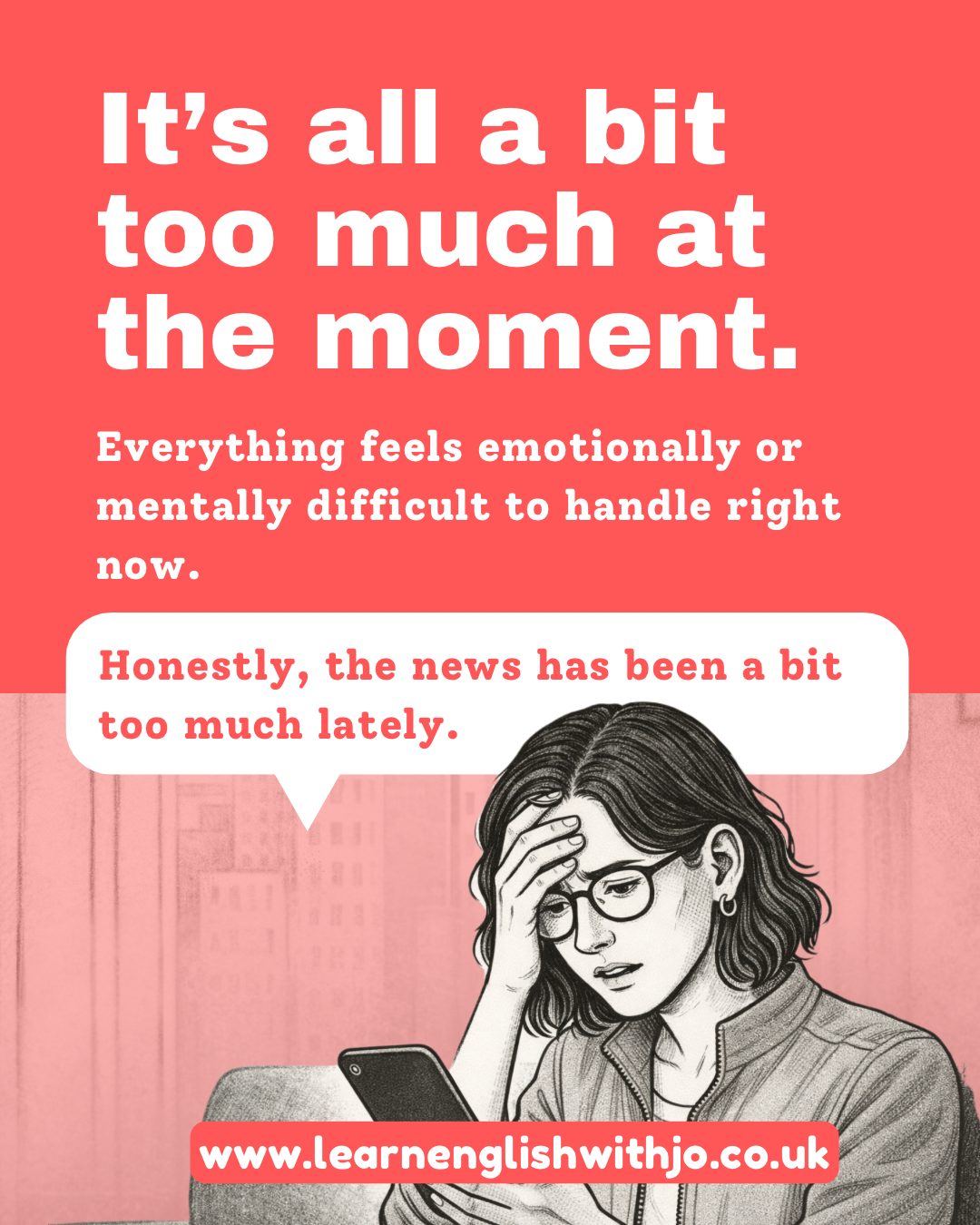
1. It’s all a bit too much at the moment.
This is one of the most common and natural ways to express overwhelm in British English.
It’s soft, understated, and very real.
Meaning: Everything feels emotionally difficult to deal with right now.
Example: Honestly, it’s all a bit too much at the moment.
You can also add: The news has been a bit too much lately.
2. I feel emotionally drained.
This phrase is so useful because it describes a very specific kind of tiredness, not physical exhaustion, but emotional fatigue.
Meaning: You feel worn out inside because of what you’ve been reading, hearing, or processing.
Example: I feel emotionally drained after reading the headlines.
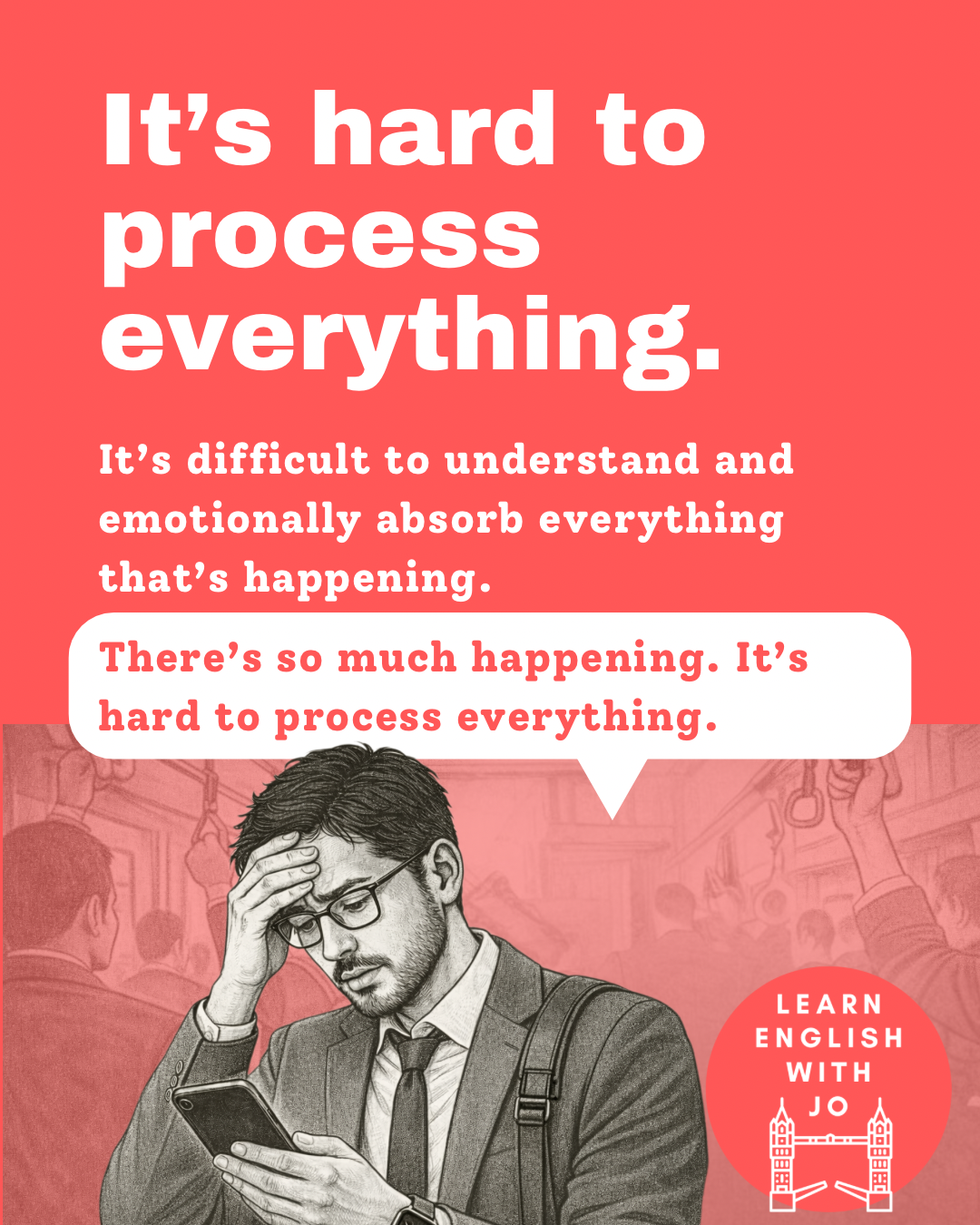
3. It’s hard to process everything.
Sometimes the problem isn’t just the sadness of the news, it’s the volume of it.
So much happens so quickly, and your brain can’t keep up.
Meaning: It’s difficult to emotionally absorb or understand it all.
Example: There’s so much happening. It’s hard to process everything.
4. I’m finding it difficult to switch off.
This is such a relatable phrase, especially if you keep checking your phone or thinking about the news even when you’re trying to rest.
Meaning: You can’t relax or stop thinking about it.
Example: I’m finding it difficult to switch off at the moment.’
Very natural, very everyday.

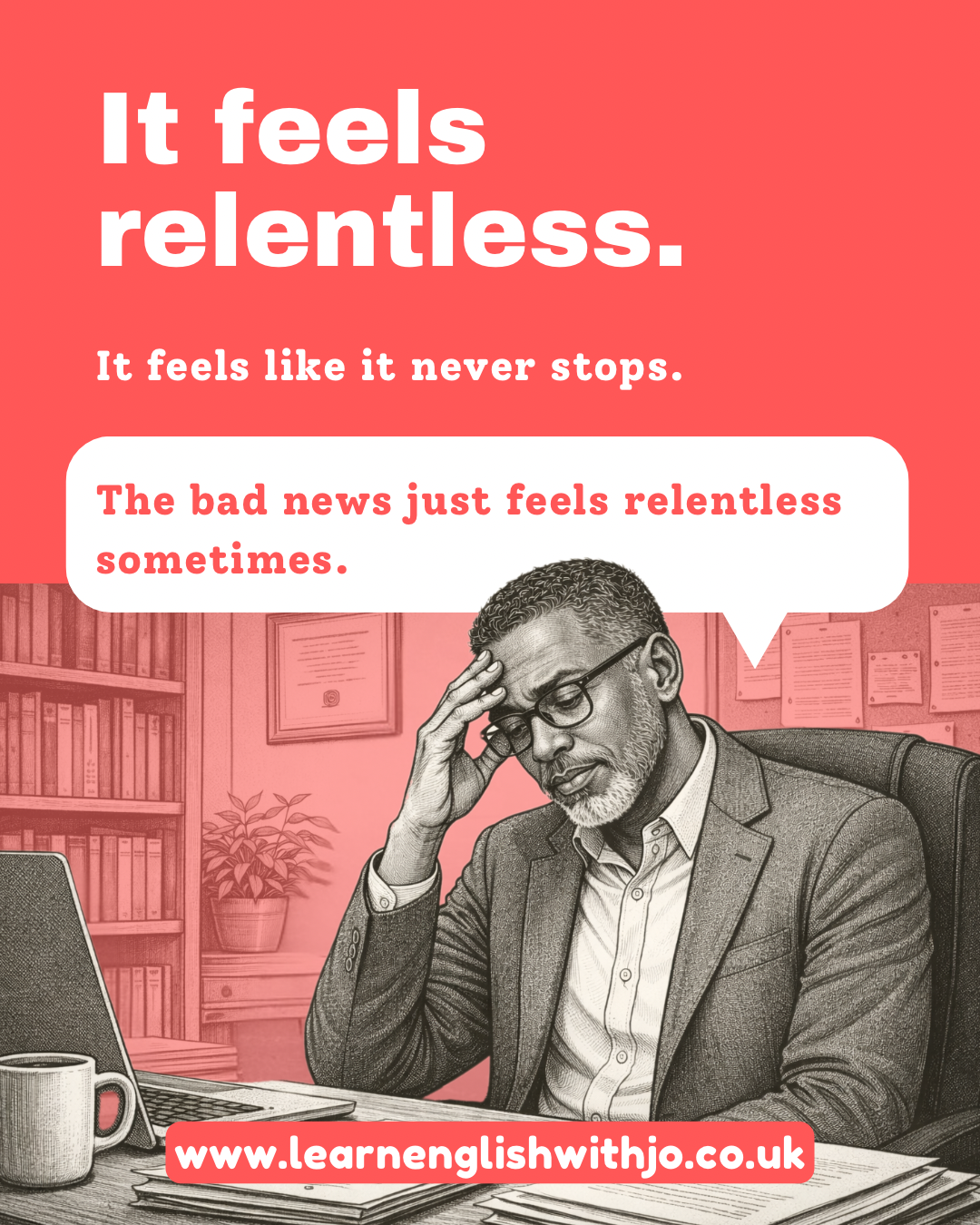
5. It feels relentless.
This is a slightly stronger word, but it’s incredibly accurate.
The news can feel like a constant stream, with no pause.
Meaning: It never seems to stop. It just keeps coming.
Example: It all feels relentless sometimes.
6. I need to take a step back.
This is such a healthy phrase.
You’re not saying you don’t care, but you’re saying you need space.
Meaning: You need a bit of distance to protect your wellbeing.
Example: I care about what’s happening, but I need to take a step back for a while.
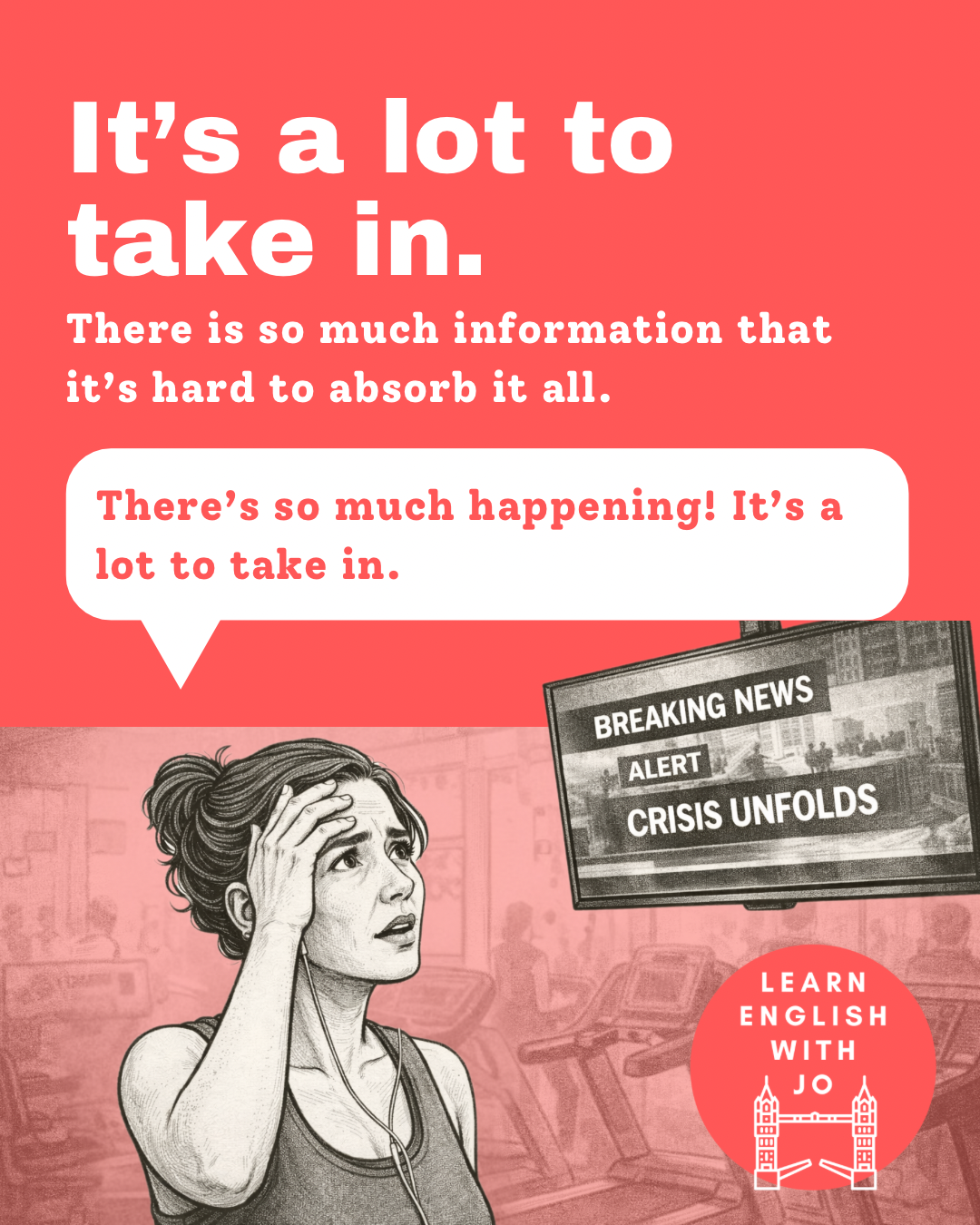
7. It’s a lot to take in.
This is a very gentle, common phrase that works beautifully in conversation.
Meaning: There’s so much information or emotion that it’s hard to absorb.
Example: It’s a lot to take in, honestly.
8. Everything is really getting to me.
This phrase is personal and emotional, but still calm.
Meaning: The situation is affecting you deeply.
Example: Everything I’m seeing in the news is really getting to me.
A little note, before I finish…
For some people, stepping back from the news is a choice.
And for others, it isn’t.
If you’re in a situation where switching off isn’t possible, if this is your daily reality, I’m sending you love and hope.