
How to Talk About Uncertainty in English
Some periods in life feel steadier than others. You make plans, you know where you’re heading, and things feel relatively settled.
And then there are times when life feels a bit more wobbly.
Plans change. The news feels heavy. The future feels harder to read. You’re not always sure what’s coming next, and that can be emotionally tiring in itself.
At times like these, it helps to have the language to talk about uncertainty clearly and naturally in English.
In this post, I’m going to share some useful English phrases you can use when things feel unclear, unsettled, or difficult to predict. Some of them are simple everyday phrases, and some are slightly more idiomatic, but all of them are useful in real conversations.
What is uncertainty?
Uncertainty is the feeling of not knowing what will happen next.
It can happen when life feels unsettled, when plans change, or when the wider world feels unstable. It can be personal, professional, emotional, or practical. You might be waiting for news, trying to make a decision, or simply feeling uneasy because so much seems unclear.
The good (ish) news is that English gives us lots of ways to talk about this feeling honestly and naturally.
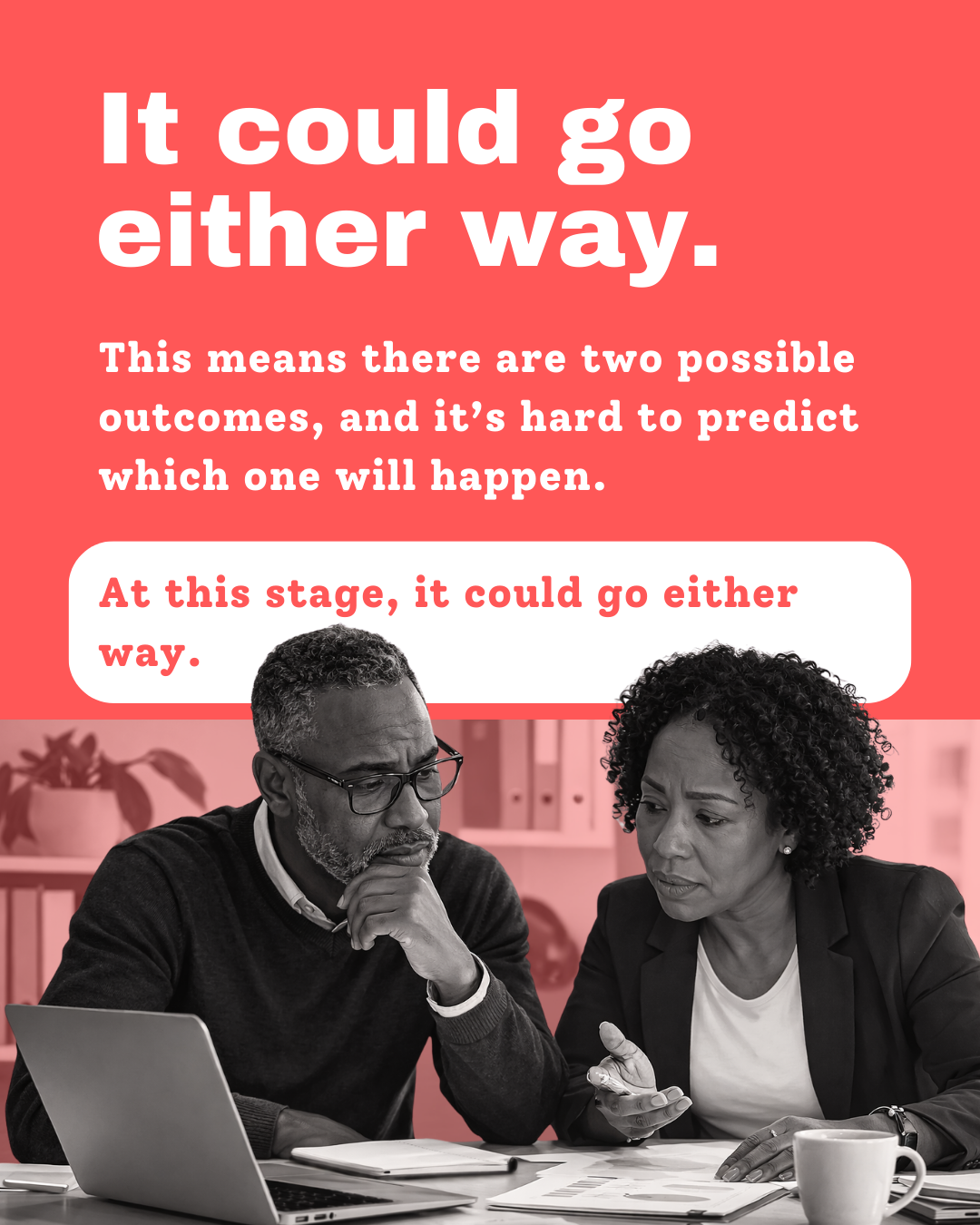
1. It could go either way
This phrase means there are two possible outcomes, and it’s hard to predict which one will happen.
It’s a useful expression when a situation still feels undecided.
Example: At this stage, it could go either way.
You could use this when talking about a job application, a difficult decision, a political situation, or even something as ordinary as weekend plans that haven’t quite come together yet.
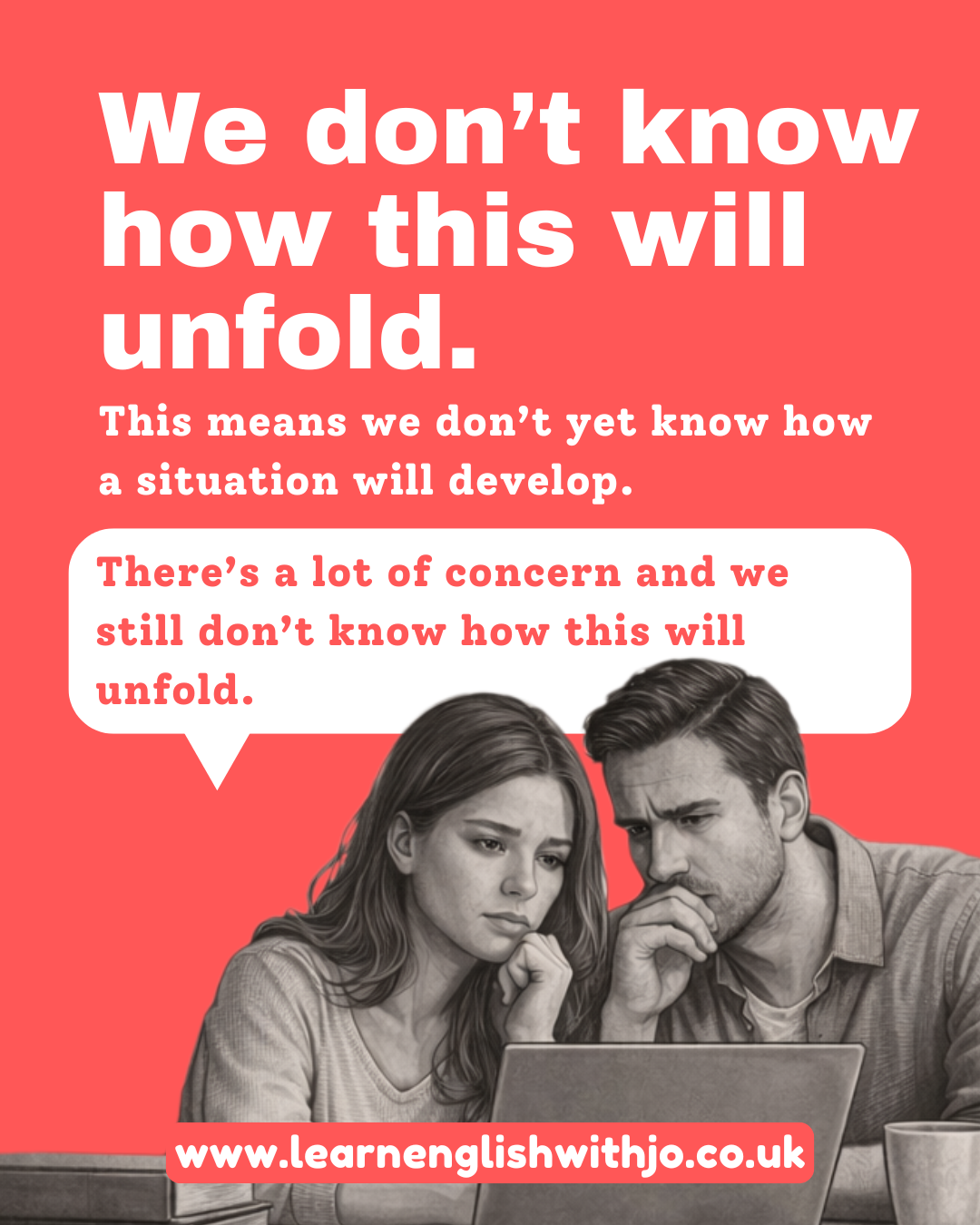
2. We don’t know how this will unfold
This means we don’t yet know how a situation will develop.
‘Unfold’ is a really useful verb here because it suggests something is still in progress. The story isn’t finished yet.
Example: There’s a lot of concern, but we still don’t know how this will unfold.
This phrase works particularly well when talking about current events, but you can also use it in more personal situations too.
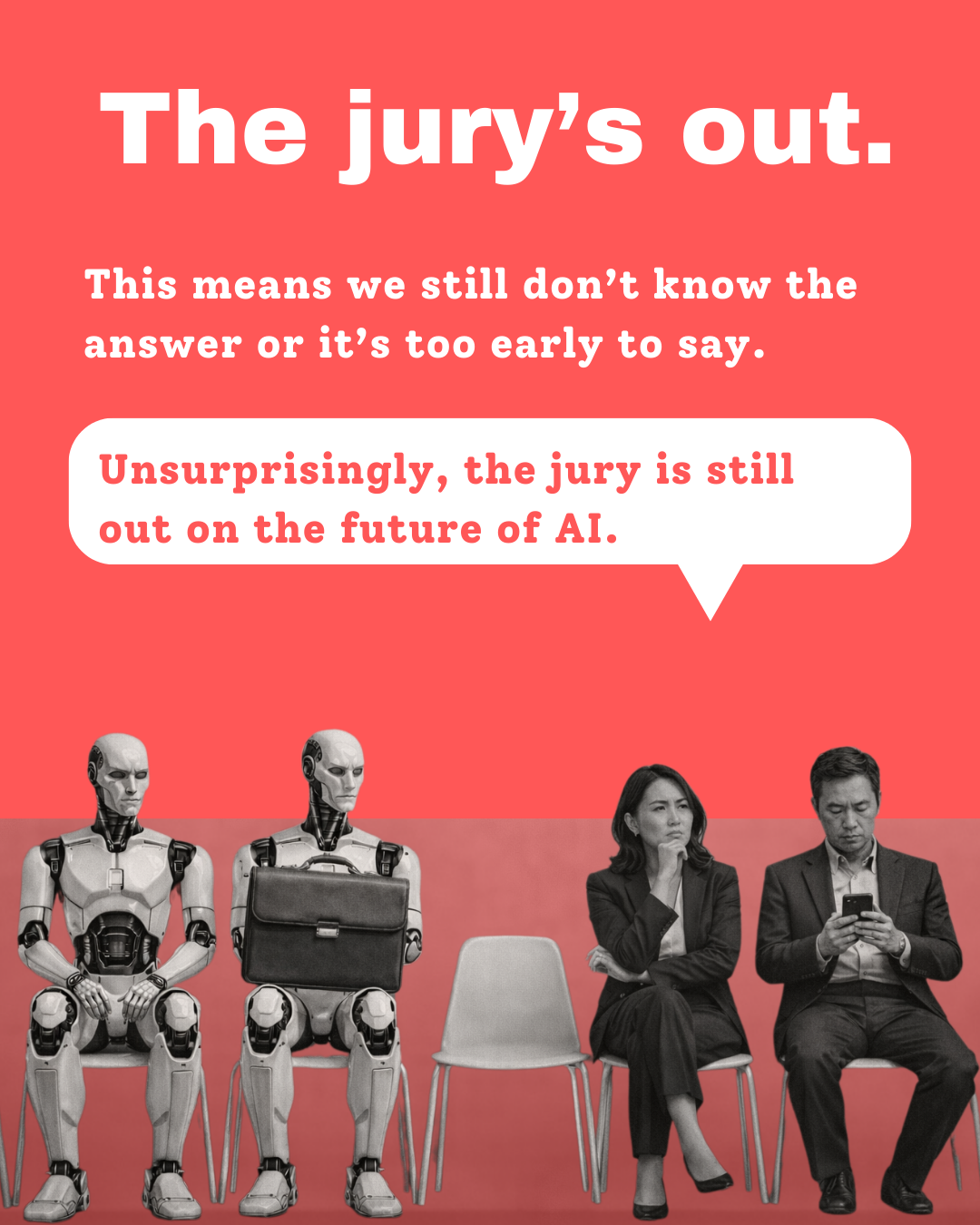
3. The jury’s out
This is a more idiomatic phrase. It means we still don’t know the answer, or it’s too early to say.
Example: The jury’s still out on what’s going to happen next.
You can use this when people are still forming an opinion or when the outcome is still unclear. It’s slightly more conversational, and it adds a bit of variety to the language you use.
4. Things are still up in the air
This means things are not decided yet or are still unclear.
It’s a very common phrase in English and one that learners often find useful because it comes up in so many situations.
Example: At the moment, everything’s still a bit up in the air.
You might use this to talk about travel plans, work changes, family decisions, or anything else that feels unresolved.
5. It’s hard to know what to expect
This is a simple, natural phrase for moments when life feels unpredictable.
Example: With so much changing, it’s hard to know what to expect.
I like this one because it sounds human. It doesn’t feel too dramatic, and it doesn’t pretend certainty exists when it doesn’t.
6. It’s hard to predict what will happen next
This is another useful everyday phrase. It’s direct, clear, and easy to apply to lots of different contexts.
Example: Right now, it’s hard to predict what will happen next.
This works well if you want to sound natural without using a more idiomatic expression.

7. Not knowing where things are heading
This phrase is more conversational and slightly more personal in tone. It’s useful when you want to talk about uncertainty over a longer period of time.
Example: At the moment, I really don’t know where things are heading.
You can use this when talking about the future of a relationship, a job, the economy, or life more generally. It has a reflective quality to it, which I think makes it especially useful.
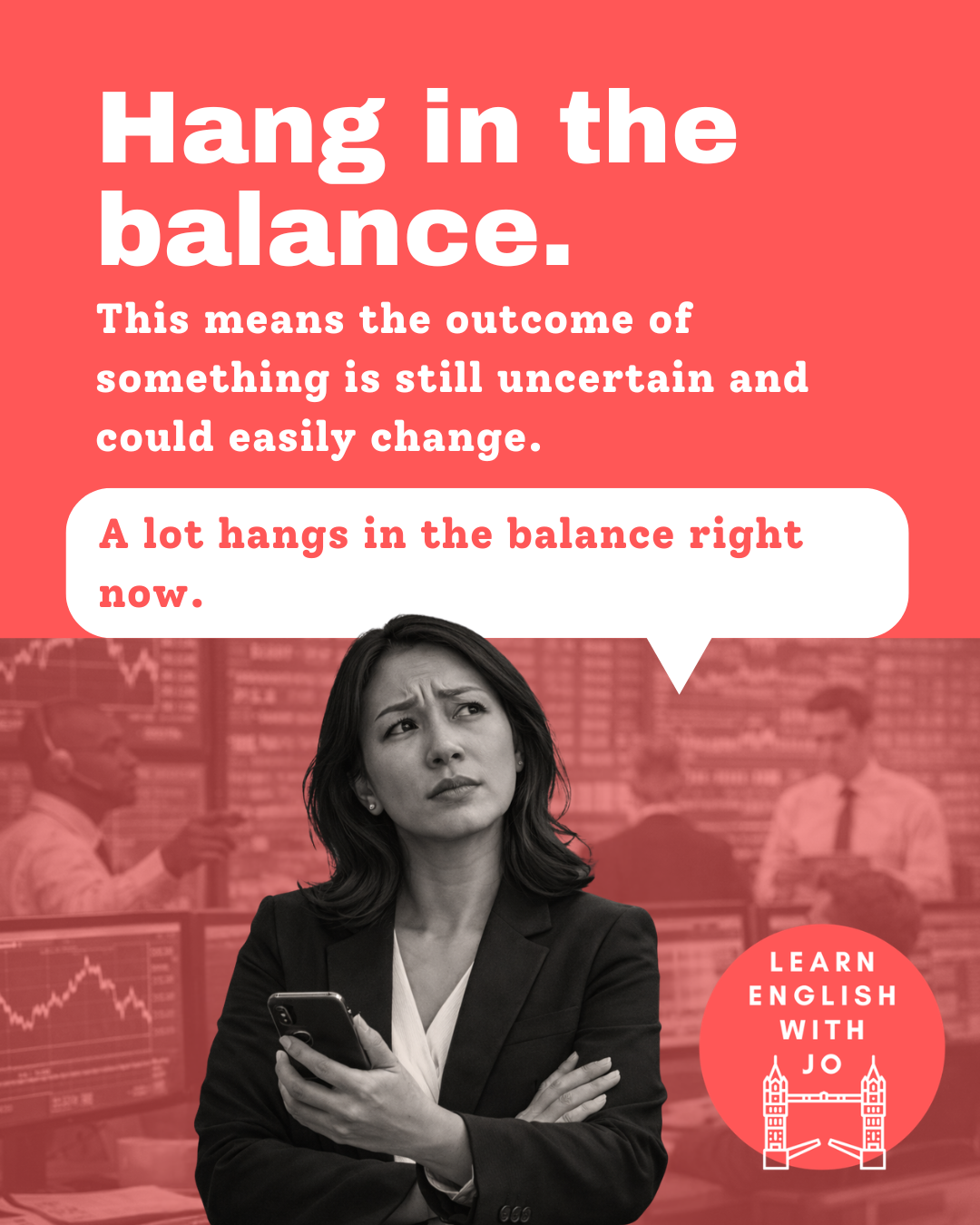
8. Things hang in the balance
This means the outcome of something is still uncertain and could easily change.
It’s a slightly more dramatic phrase, but still a good one to know.
Example: A lot seems to hang in the balance right now.
This phrase is often used in more serious contexts, where the result of something matters quite a lot.
9. We’ll have to wait and see
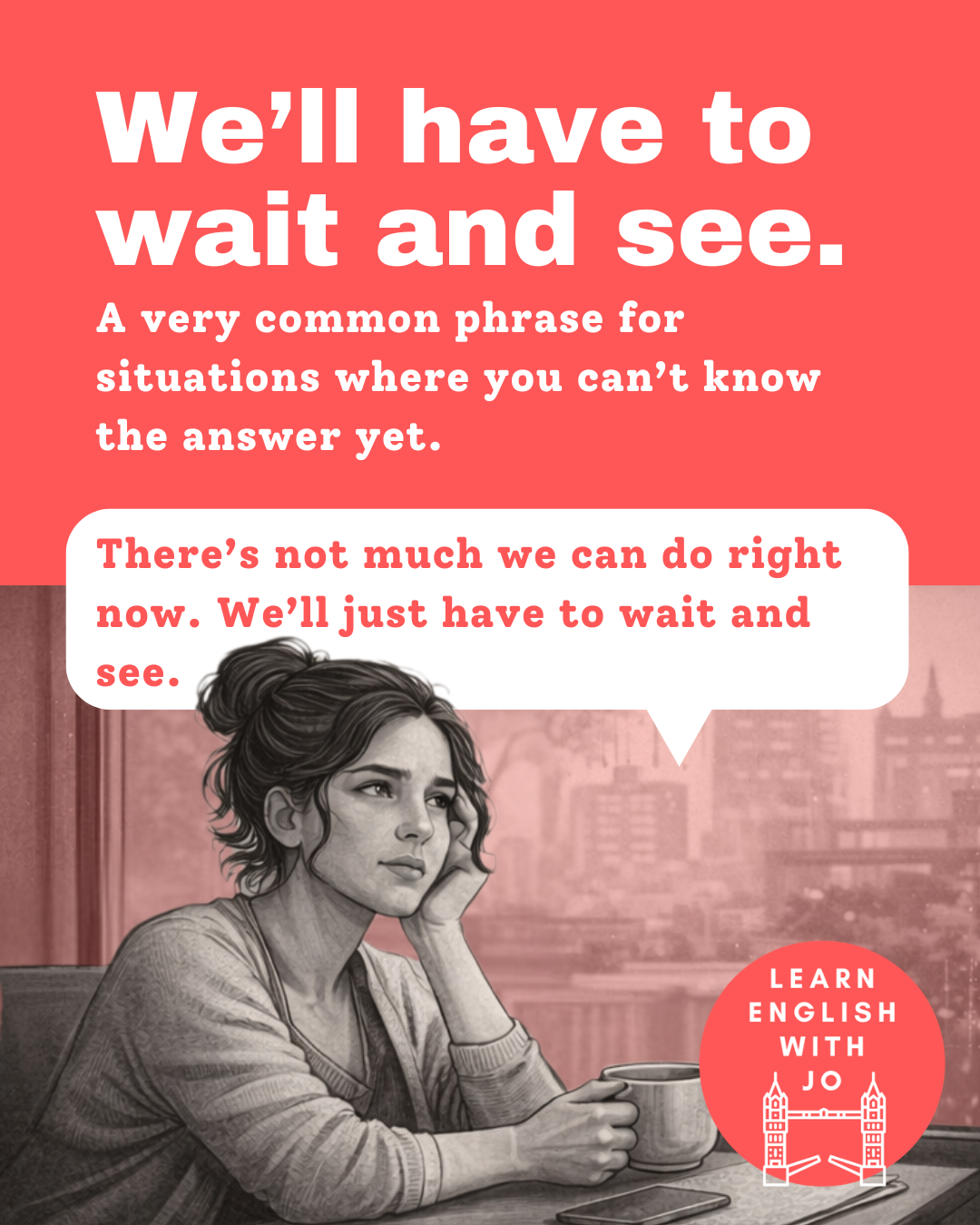
This is a very common phrase for situations where you can’t know the answer yet.
Sometimes there simply isn’t anything else to do. You don’t have all the information, you can’t force clarity, and you have to live with a bit of uncertainty for a while.
Example: There’s not much we can do right now. We’ll just have to wait and see.
It’s simple, but very natural, and native speakers use it all the time.
Why this kind of language matters
When things feel uncertain, it’s easy to feel a bit stuck in your language too. You know what you feel, but you’re not always sure how to express it.
That’s why learning phrases like these can be so useful. They help you talk about difficult, messy, unresolved situations in a way that feels calm, clear, and natural.
And really, that’s often what we need most in English not perfect grammar, not impressive vocabulary for the sake of it, but language that helps us say what we actually mean.
Uncertainty is part of life, whether we like it or not. Some seasons feel steadier, and some feel much more unsettled. But having the language to talk about that can make you feel a little more grounded.
So here’s a quick recap of the phrases from this post:
It could go either way
We don’t know how this will unfold
The jury’s out
Things are still up in the air
It’s hard to know what to expect
It’s hard to predict what will happen next
Not knowing where things are heading
Things hang in the balance
We’ll have to wait and see
Try choosing one or two and writing your own example sentences with them. That’s often the best way to make new language feel more natural and more like yours.