
How to Talk About AI in English: 15 Phrasal Verbs You Need to Know
Let's be honest. AI has become one of those topics that comes up everywhere. In meetings, in the news, at dinner with friends who you thought had no interest in technology whatsoever. And if you're learning English, that means you need the language to talk about it. You don’t just need the vocabulary, but also the kind of natural, fluent expressions that make you sound like you actually know what you're talking about.
Phrasal verbs are a big part of that. They're the verbs that real speakers reach for in conversation, and they can make the difference between sounding textbook-correct and sounding genuinely natural. So here are 15 phrasal verbs that will help you talk about AI with more confidence and fluency.
1. To roll out
To gradually release or introduce something new.
ChatGPT was rolled out to the public in late 2022.
They're planning to roll out the new AI features next month.
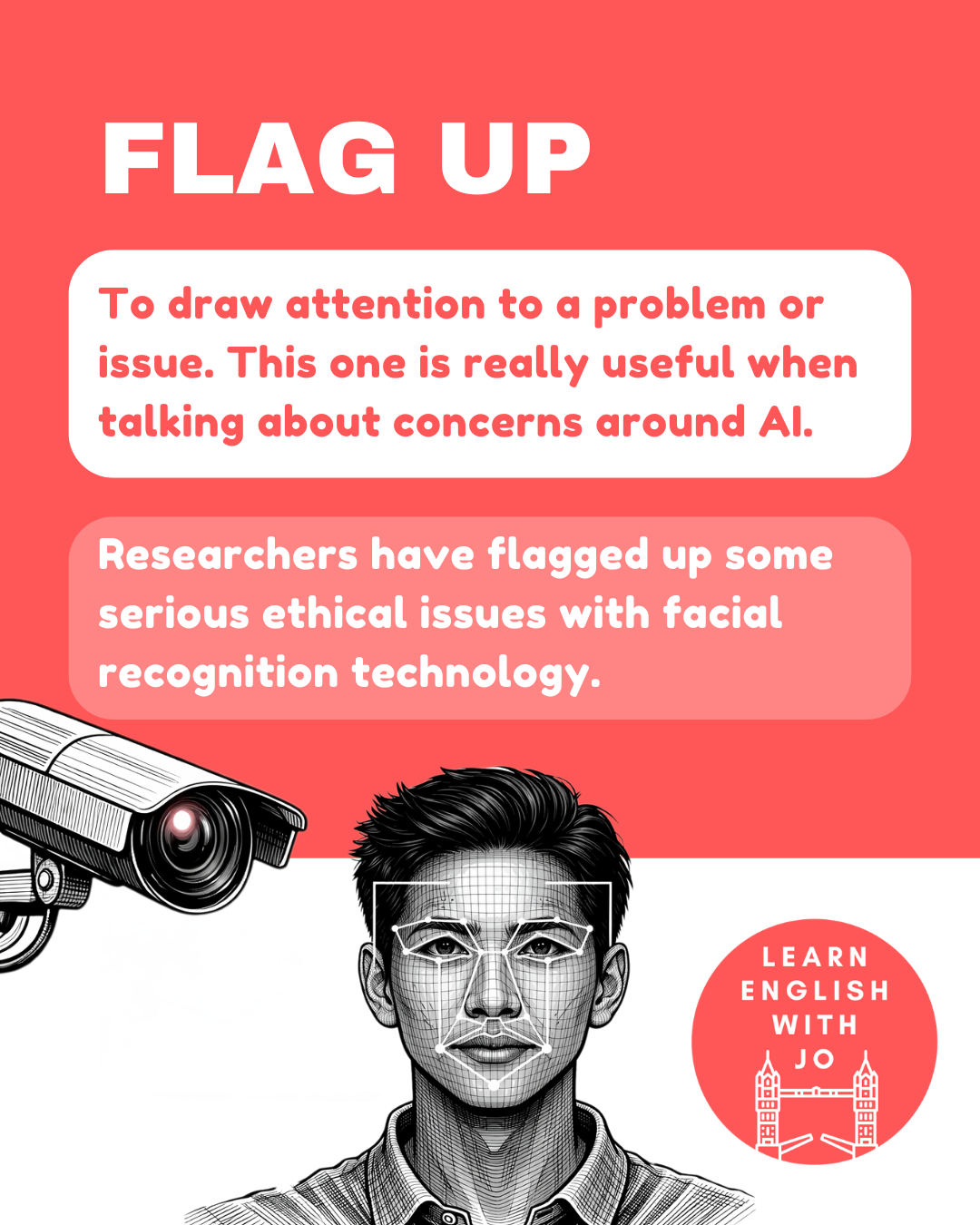
2. To flag up
To draw attention to a problem or concern.
Researchers have flagged up some serious ethical issues with facial recognition technology.
The report flagged up the risk of AI being used to spread misinformation.
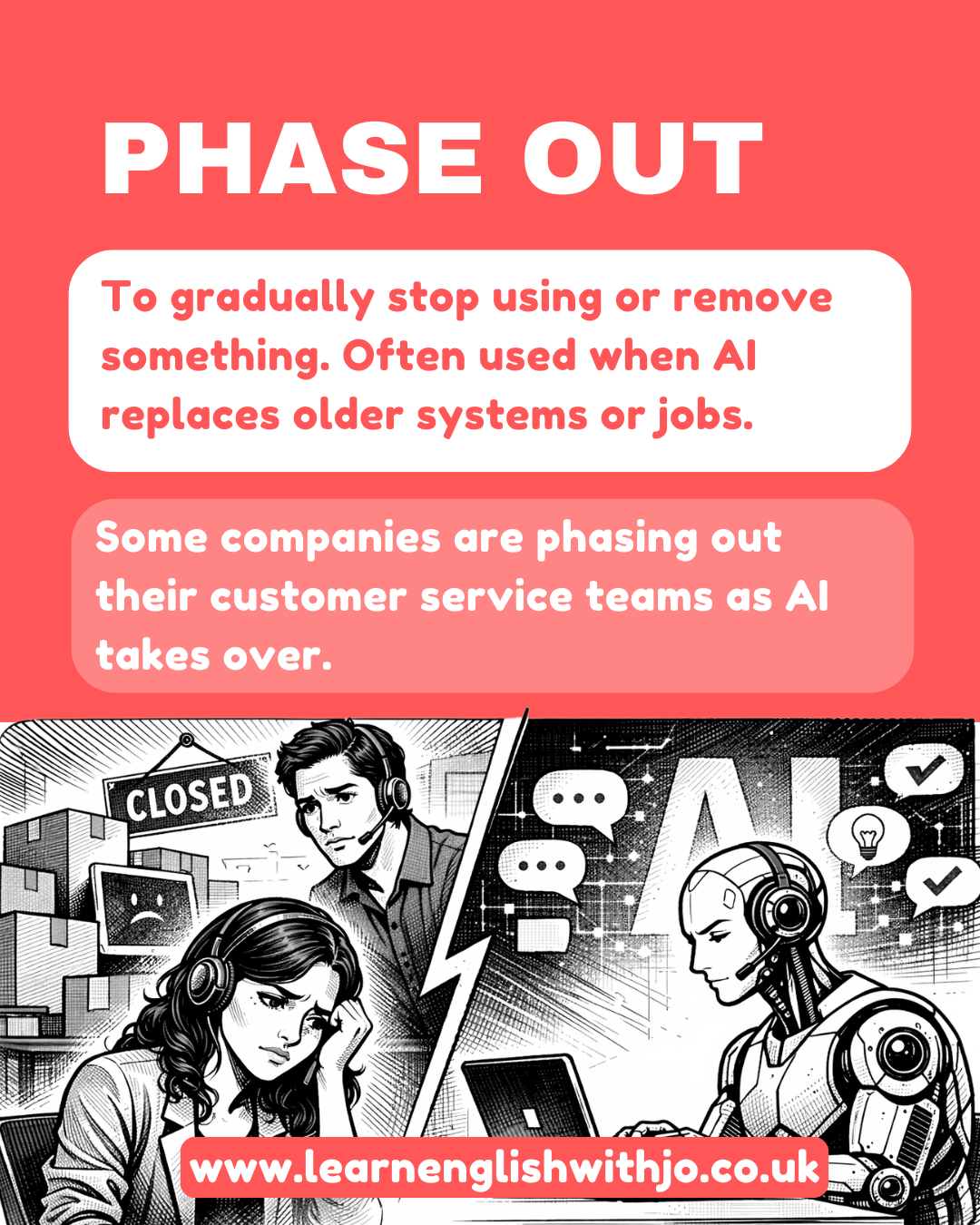
3. To phase out
To gradually stop using or remove something.
Some companies are phasing out their customer service teams as AI takes over.
Do you think traditional search engines will be phased out eventually?
4. To opt out
To choose not to participate in something.
You can opt out of having your data used to train AI models, but it's not always obvious how.
A lot of people don't realise they've opted in by default and have to actively opt out.

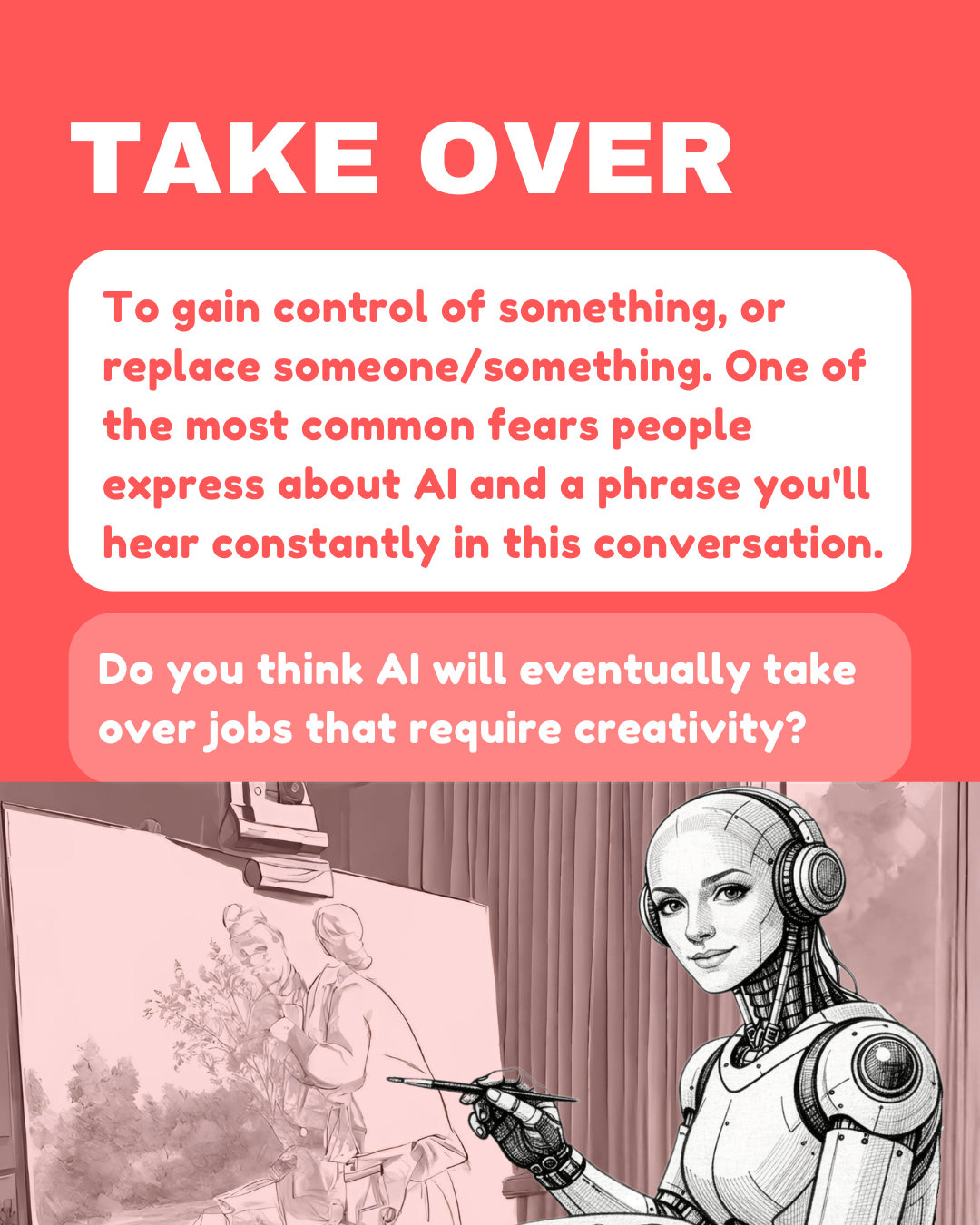
5. To take over
To gain control of something, or replace someone or something.
Do you think AI will eventually take over jobs that require creativity?
It feels like AI has taken over the whole conversation about the future of work.
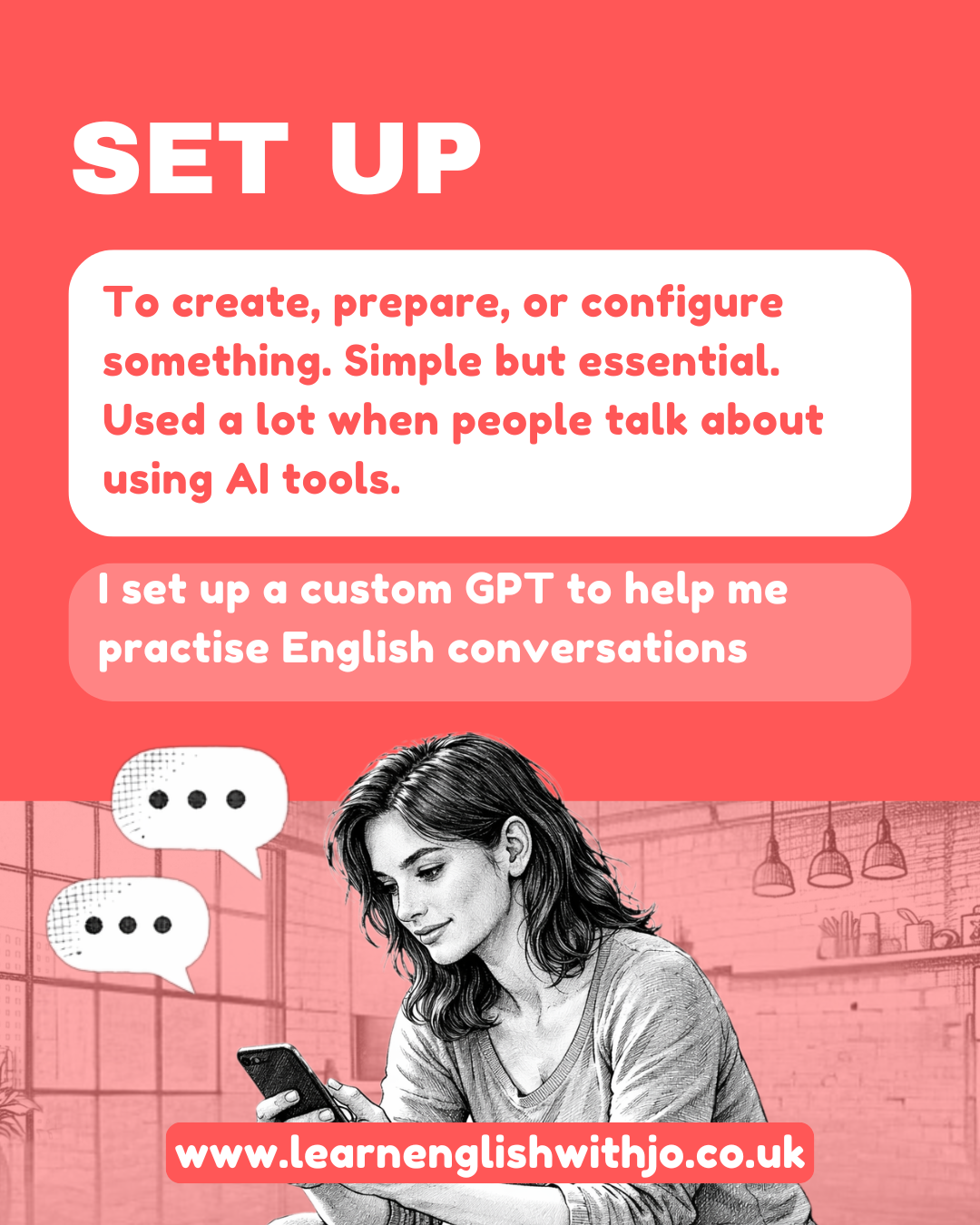
6. To set up
To create, prepare, or configure something.
I set up a custom GPT to help me practise English conversations.
It only takes a few minutes to set up an AI assistant for your workflow.
7. To come up with
To produce an idea, answer, or solution.
The AI came up with three different versions of the email in seconds.
I asked it to come up with some ideas for my presentation and it was actually quite good.

A practical PDF for upper-intermediate to advanced learners who want more speaking practice without the pressure of a formal setting. These 20 prompts are designed for use with Claude, a free AI tool, and cover everything from small talk and storytelling to professional English and deeper conversation. Use them whenever you have a spare ten minutes.
8. To push back
To resist or challenge something
A lot of writers are pushing back against the use of AI to generate creative content.
There's been real pushback from educators who are worried about students using AI to cheat.
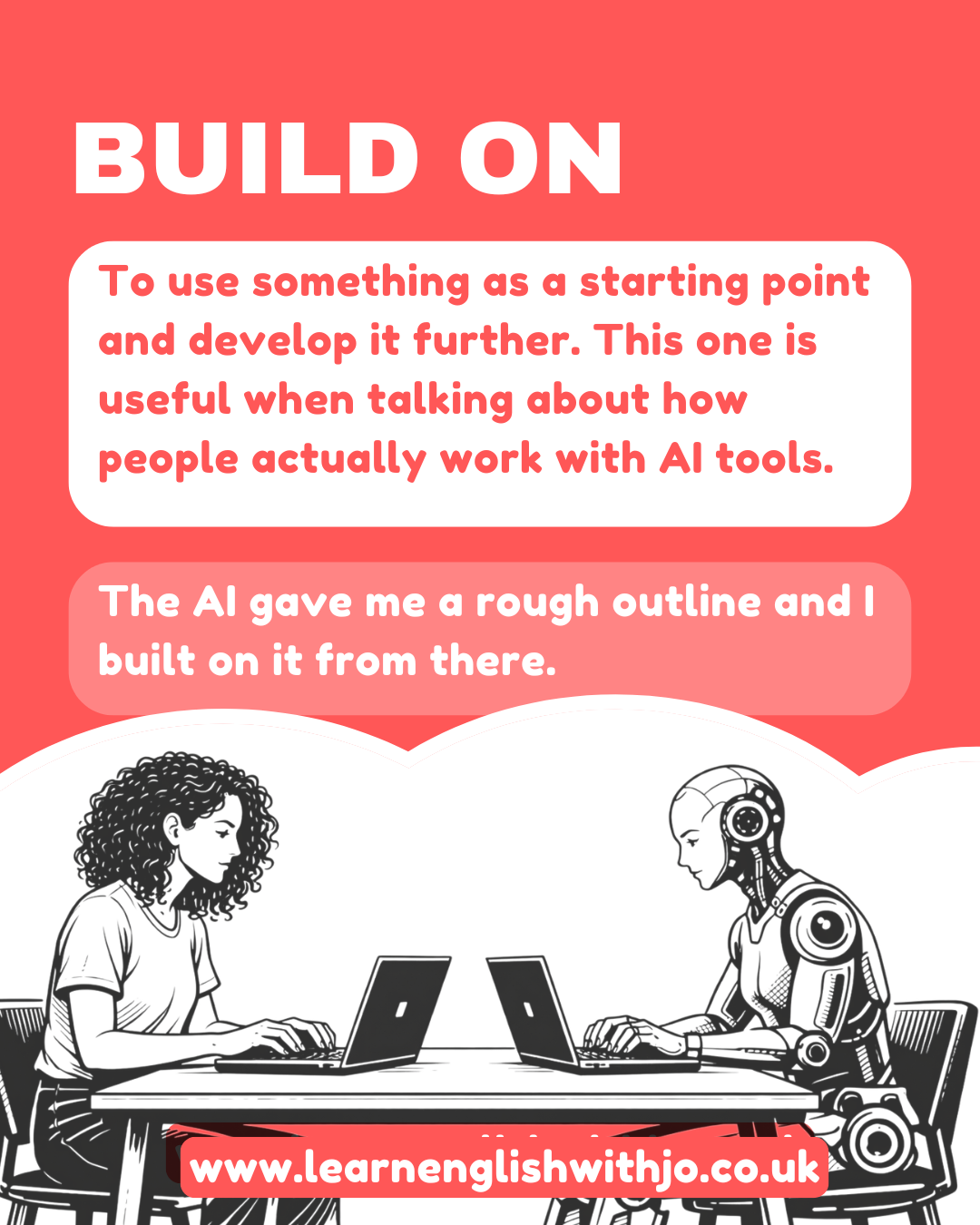
9. To build on
To use something as a starting point and develop it further
I don't use AI to write for me. I use it to build on my initial ideas.
The AI gave me a rough outline and I built on it from there.
10. To keep up with
To stay informed about something that is changing quickly.
It's genuinely hard to keep up with how fast AI is developing.
Do you feel like you're keeping up with all the changes, or does it feel a bit overwhelming?
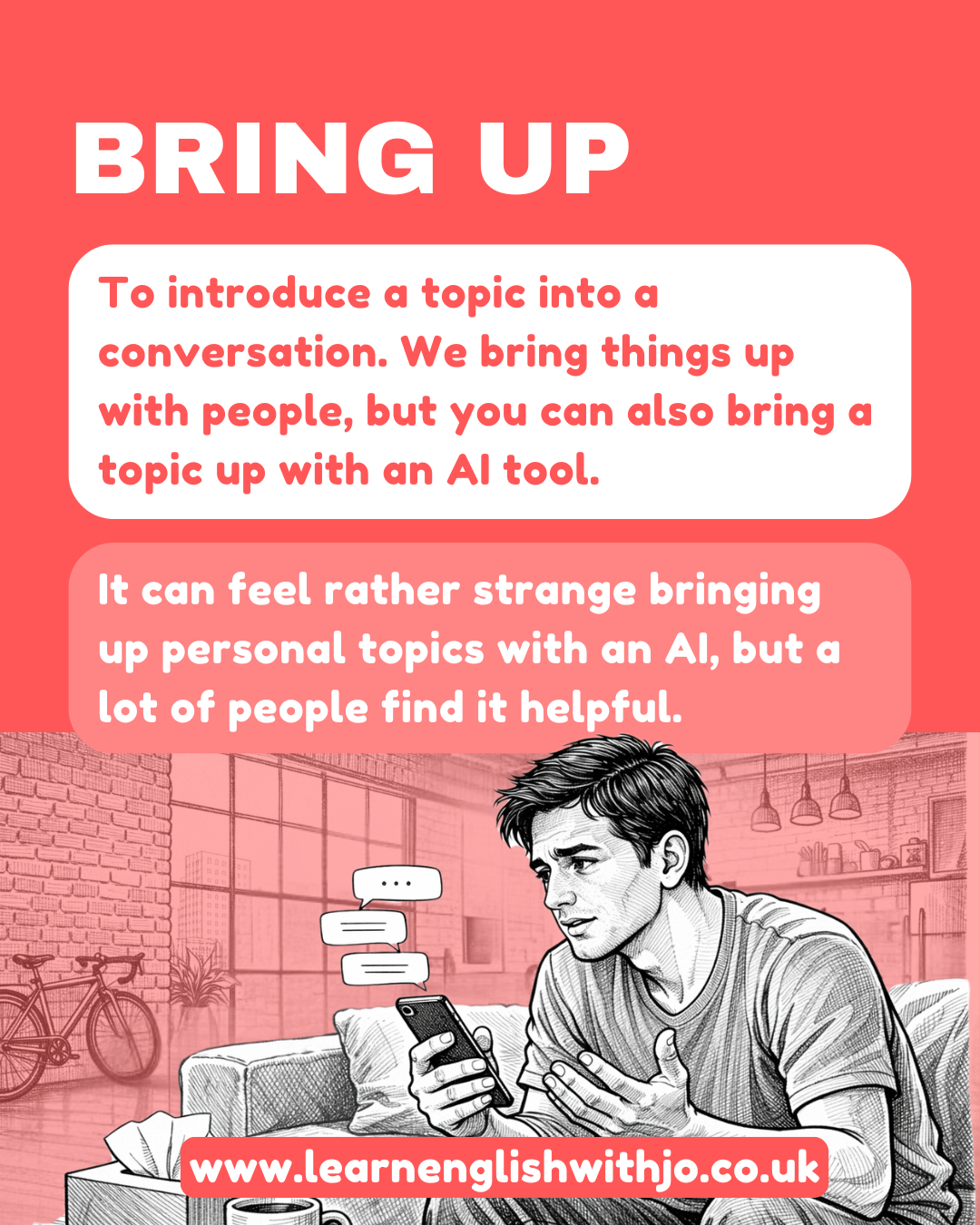
11. To bring up
To introduce a topic into a conversation.
I brought up the subject of climate change with the AI and it gave me a really balanced overview.
It can feel sort of strange at first, bringing up personal topics with an AI, but a lot of people find it surprisingly helpful.
12. To work through
To deal with something carefully and methodically, step by step
I used it to work through the structure of my argument before I started writing.
Sometimes it helps to work through a difficult problem out loud, even if your conversation partner happens to be an AI.
13. To break down
To explain something complex by dividing it into smaller, simpler parts.
I asked it to break down the contract into plain English and it was so much clearer.
If you're struggling with a concept, ask an AI to break it down for you step by step.
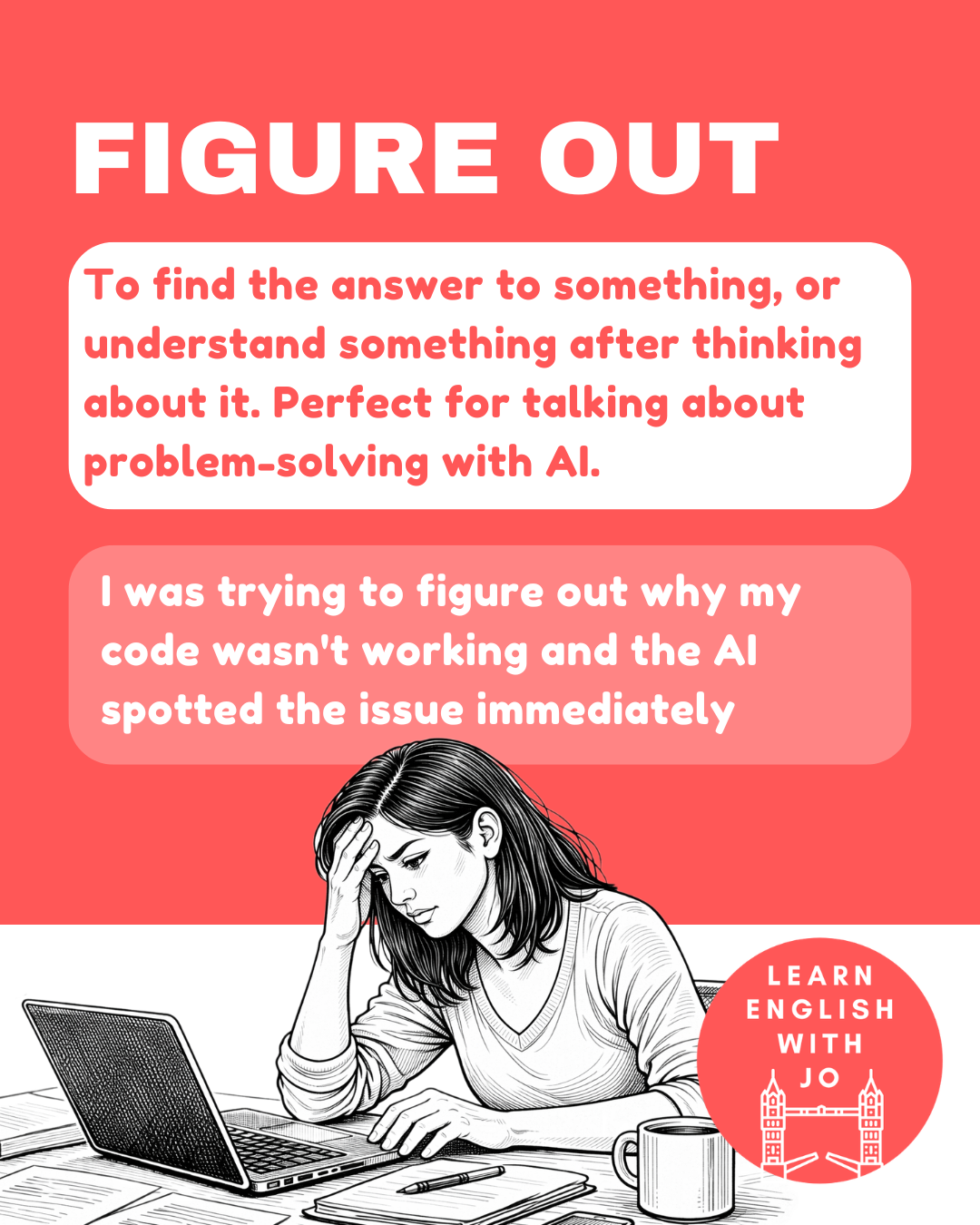
14. To figure out
To find the answer to something, or understand something after thinking it through
I was trying to figure out why my code wasn't working and the AI spotted the issue straight away.
We used AI to figure out which approach would be most efficient.
15. To rely on
To depend on something or trust it to do a job for you
A lot of people are starting to rely on AI for things they used to figure out for themselves.
I use it as a tool, but I try not to rely on it so heavily that I stop thinking for myself.
A note on phrasal verbs
If phrasal verbs feel like one of the trickier parts of English, you're not imagining it. They're incredibly common in spoken and written English, but they don't always follow obvious patterns, and they can mean very different things depending on context. The best way to get comfortable with them is to see them used naturally, in real sentences, around topics that actually matter to you.
Which is sort of the point of this list.
AI might be a topic you find exciting, slightly unsettling, or somewhere in between. But it's a conversation that isn't going anywhere, and having the right language to engage with it confidently makes a real difference, if you know what I mean.
Want to practise using language like this in a real conversation?
That's exactly what my one-to-one sessions are for. We work on the kind of English that helps you express yourself clearly and naturally, around topics that are actually relevant to your life. If that sounds like what you need, I'd love to hear from you.