
How to Practise Speaking English: 5 Practical Ideas
If you understand English pretty well but don’t often get the opportunity to speak it, this post is for you.
Most of us know that to become more confident speaking a language, we have to actually speak it. That sounds simple, but it isn’t always.
Perhaps you don’t have English speakers around you. Maybe you feel nervous speaking to other people, don’t have the money to spend on classes every week or genuinely don’t know where to begin.
The good news is that you don’t have to wait for the perfect speaking partner or until you feel completely confident.
Here are five practical ways to get more English speaking practice, including some you can try at home and completely free.
1. Use AI as an English conversation partner
Using an AI tool such as ChatGPT or Claude is probably one of the easiest ways to practise speaking English at home.
You don’t need another person, you can talk about almost any subject and there is very little fear of being judged. If you forget a word, make a grammar mistake or need to repeat yourself three times, the conversation can simply continue.
That makes AI a useful stepping stone if you don’t yet feel confident speaking English to other people.
However, I would encourage you to use it for genuine conversation rather than simply asking it to test you or correct your grammar.
Try giving the AI some information about yourself and the kind of conversation you would like to have. For example:
I want to practise speaking English for ten minutes. I’m an upper-intermediate learner and I’m interested in psychology. Ask me questions and respond naturally to what I say. Please don’t correct every mistake while I’m speaking, but give me some brief feedback at the end.
You could talk about a film you have just watched, something that happened at work, a book, travel, football or anything else you would genuinely discuss in your first language.
The more context you give the AI about your English, your interests and the type of conversation you want, the more natural and useful the experience is likely to feel.
I have also written a more detailed guide to using AI to practise speaking English, including advice on setting up a conversation and asking for useful feedback.
You can buy my 20 Speaking Prompts to Use With Claude below

A practical PDF for upper-intermediate to advanced learners who want more speaking practice without the pressure of a formal setting. These 20 prompts are designed for use with Claude, a free AI tool, and cover everything from small talk and storytelling to professional English and deeper conversation. Use them whenever you have a spare ten minutes.
Of course, AI is not the same as speaking to another human being. But it can help you become more comfortable finding words, forming sentences and speaking without preparing everything in advance.
2. Speak to other people who are learning English
You don’t need to find a native English speaker to have a useful conversation in English.
If your first language is Italian and you speak English to someone whose first language is Japanese, you are still using English for real communication. In fact, this may be closer to the way you will use English at work, while travelling or in other international settings.
You could look for:
A language-exchange partner
An online conversation group
A local English-speaking meetup
A friend or colleague who also wants to practise
An international online community
The important thing is to find someone you are genuinely interested in speaking to.
If you have nothing to say to one another, it will be difficult to keep the arrangement going. You don’t necessarily need to have identical interests, but you do need some curiosity about each other.
The best speaking practice gradually stops feeling like an exercise and starts feeling like a conversation between two people.
3. Have one-to-one English conversation sessions
One-to-one conversation sessions cost money, so they won’t be possible or accessible for everyone. However, if you can afford them, they can provide a useful bridge between studying English and using it more confidently in the outside world.
Unlike a large group class, a private session can be shaped around you: your interests, your level and the situations you find difficult.
You don’t have to wait while five other people take their turn. You can talk about subjects that genuinely matter to you and work on things such as:
Speaking in meetings
Making small talk
Explaining complicated ideas
Finding words under pressure
Expressing disagreement
Talking about yourself more naturally
This is the main type of work I do. I have relaxed one-to-one conversations with intermediate-to-advanced English speakers who want to feel more confident and more like themselves when they speak.
My sessions offer an opportunity to use the English you already know, with gentle feedback and support.
You can find out more about my one-to-one English conversation sessions here.
4. Join an English-speaking community or conversation group
Sometimes what helps most is simply having a regular place where you know you can turn up and use your English.
This might be a local conversation group, an online community, a book club or a small Zoom discussion.
The advantage of a regular group is that you don’t have to keep making the same decision: Should I practise my English this week?
The opportunity is already in your diary. Speaking English gradually becomes something you do rather than something you keep intending to do.
This is partly why I created the Learn English With Jo community on Substack. Paid members can join relaxed Zoom conversations and take part in our Telegram voice-note group, which offers a lower-pressure way to practise speaking.
However, it doesn’t have to be my community. Look around and find something that suits your personality, interests and schedule.
If you dislike competitive activities or being put on the spot, for example, search for a smaller, more relaxed group where you will have time to think and speak.
Regularity matters, but so does finding somewhere you feel comfortable enough to return to.
You can find out more about the Learn English With Jo community here.
5. Stop practising English and use it to do something
This may be the most important suggestion of all.
Try to find situations in which English is not the actual subject.
If every time you speak English you think, I’m practising my English, you may start monitoring your grammar, vocabulary and pronunciation instead of concentrating on what you want to say. This can create a huge amount of unnecessary pressure.
Instead, you could:
Join an online photography group that happens to communicate in English
Take a short course in English
Attend an international event
Join an English-language book discussion
Become part of a professional community
Talk about a hobby with people from different countries
In these situations, the purpose of the conversation changes.
Instead of thinking ‘I need to demonstrate my B2-level English.’ You begin thinking ‘I want to tell this person what I think.’
English becomes a tool for connecting, contributing and expressing yourself rather than something you are constantly studying.
Don’t try to do everything at once
You don’t need to start using AI every morning, find a language partner, join three conversation groups, book weekly lessons and start attending international conferences.
You would probably manage it for about three days and then give up.
Choose one option that fits into your life as it is now.
A small, regular amount of speaking is far more manageable than an intense burst of practice once a month. The aim is to use English often enough that speaking it gradually starts to feel less unusual and less intimidating.
This is especially important if you already understand a great deal of English but still don’t feel ready to speak. As I explained in my previous article,I Understand English but Can’t Speak It, you may not need to learn much more before you begin.
You may simply need more opportunities to trust and use the English you already have.
Try my free seven-day English speaking challenge
If you’re not sure where to start, try something very simple.
For the next seven days, record a one-minute voice note in English every day.
You don’t need a speaking partner. You don’t need to pay anything and you don’t have to send the recordings to anyone.
Just use the voice-recording app on your phone.
I have created a free booklet containing seven speaking prompts, so you don’t have to spend time deciding what to talk about. You can find it on my Substack here.
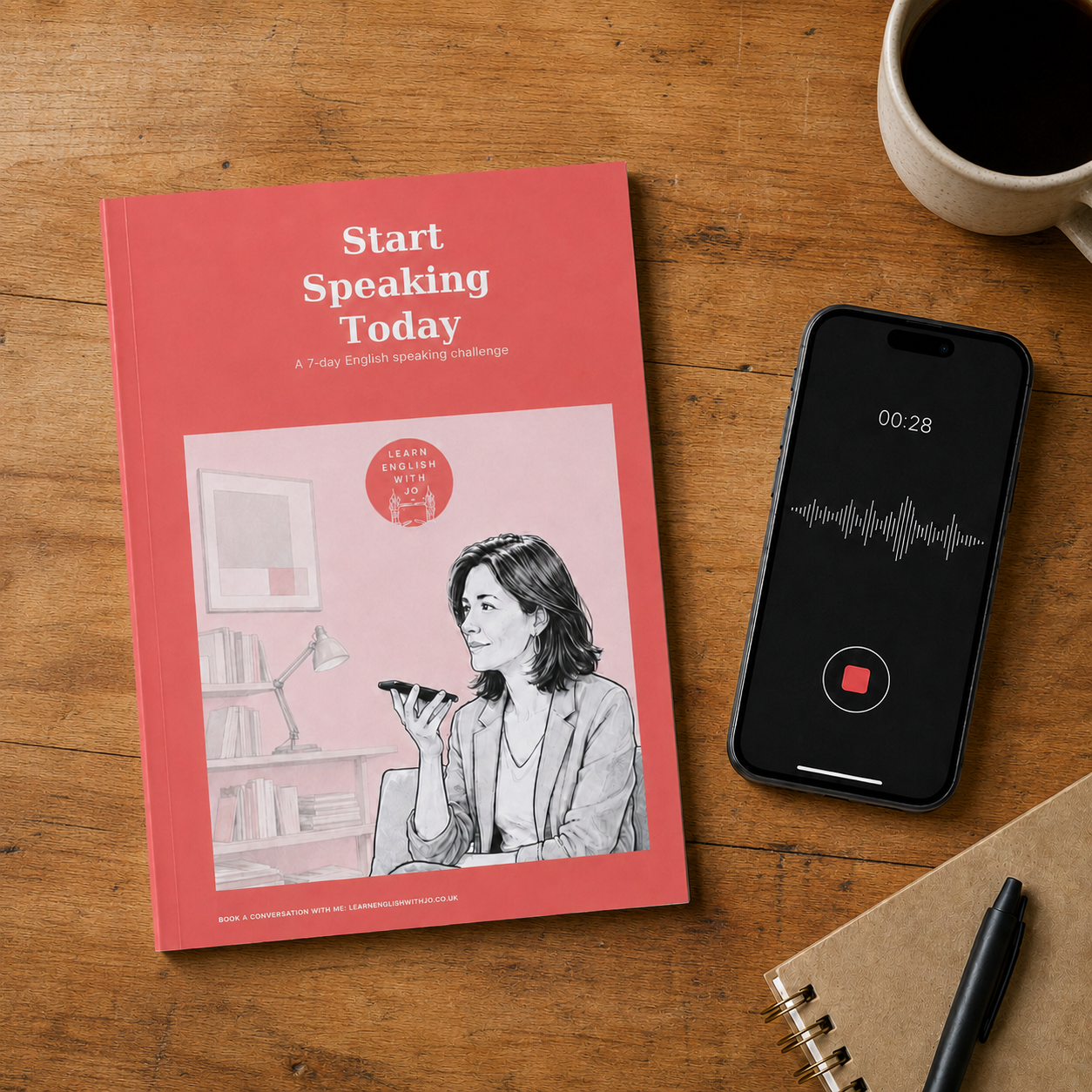
Seven minutes over seven days may not sound like very much. But for those seven minutes, you will no longer be thinking about speaking English.
You will actually be speaking it.
Start with the English you already have
You don’t have to wait for somebody to magically provide the perfect opportunity to speak English. You also don’t have to wait until you feel completely confident.
Choose one small way to start using the English you already have.
If you want a private and completely free place to begin, record your first voice note today. If you would prefer to practise through a relaxed, meaningful conversation with another person, you are very welcome to book a one-to-one session with me.
The important thing is simply to start speaking.