
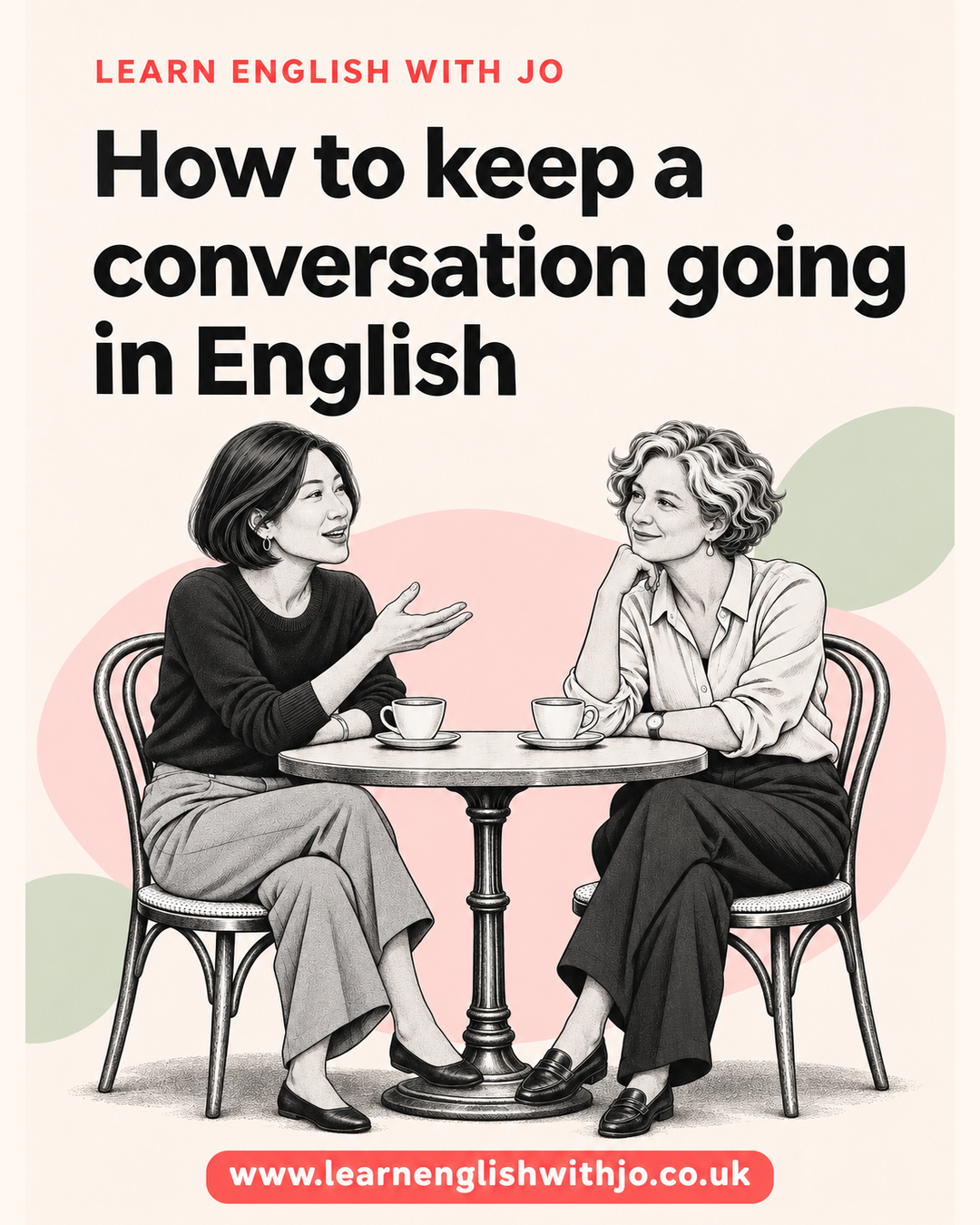
You understand what the other person has said. You're interested. You'd like to carry on talking.
But all that comes out is “Oh, nice.”
Then there's a pause. You search for a question, think about your grammar and start wondering whether the other person thinks you're bored.
If you've been wondering how to keep a conversation going in English, this might feel familiar. Perhaps you can follow a podcast or explain something complicated at work, yet a casual chat leaves you unsure what to say next.
Everyday English conversation involves lots of small decisions. Which detail should you respond to? Would a question fit here? Is there something of your own you could share?
Here are three ideas to help with those moments, an example of how they work together and a way to practise in your own time.
Why can small talk in English feel difficult?
Small talk in English can feel unpredictable. You're listening, finding your words and deciding how much to say, all at once. With a new colleague or someone you've just met, you're also getting a sense of the person.
You may find yourself giving shorter answers than you intended because you're concentrating on speaking correctly. Afterwards, several possible replies come to mind.
One useful starting point is to give yourself a small focus: what has this person just told me, and what interests me about it? Their words can give you a way into the next part of the conversation.
1. Respond to what the other person has said
Before searching for a new topic, take a moment to acknowledge what you've heard.
Someone might be sharing good news, describing a frustrating week or mentioning something they're looking forward to. A brief response shows you've taken it in.
The language can be simple: “Oh, lovely” or “That sounds frustrating”, depending on what they've told you. Your voice and expression help communicate your interest too.
For upper-intermediate and advanced learners, improving English conversation skills often includes getting more comfortable choosing familiar language in the moment. A short, thoughtful response gives you somewhere to start.
2. Ask a follow-up question about a detail
Finding follow-up questions in English becomes easier when you listen for something specific.
If someone mentions an exhibition, a class or a weekend away, you already have several possible directions. You might be curious about what they enjoyed, how they chose it or whether they'd go again.
Choose something you'd actually like to know. That gives your question a purpose and helps you stay interested in the answer.
You can keep it light. A question about a place, an activity or a practical detail can be a comfortable way to get to know someone. Let their response guide how much further you explore the topic.
3. Share a little of yourself
When you're trying to show interest, it's easy to put all your energy into asking questions. You can also contribute an experience, a preference or a small detail from your own life.
If someone asks about your weekend, “It was good” gives them little to pick up on. Adding “I finally tried that walking group I'd been thinking about” offers them something they could ask about or relate to.
An ordinary detail can open up a conversation. You might mention something you've enjoyed, something you're looking forward to or something you've been meaning to try.
Share as much as feels comfortable, then leave some room for the other person to respond.
An example of keeping a conversation going in English
Imagine you're chatting with a colleague:
Your colleague: “I went to a photography exhibition on Saturday. I nearly stayed at home because of the rain, but I'm glad I went.”
You: “Oh, lovely. What did you enjoy about it?”
Your colleague: “The pictures were all taken around here. Some of the streets looked completely different in the photos.”
You: “That sounds interesting. I've been trying to take more photos on my walks, actually. It makes me notice things I usually walk straight past.”
Your colleague: “Oh, what sort of things do you photograph?”
Your first response acknowledges the visit and invites your colleague to say more. Later, you share a related detail about yourself. That gives them an opening to ask you something.
You might take the conversation in another direction. Perhaps you're curious about where the exhibition is or whether it's still open. Both would be natural things to ask.
The exchange can develop as you each respond to what the other person contributes.
How to practise English conversation on your own
You can give yourself a little English conversation practice before your next chat.
Look back at your colleague's first comment about the exhibition. Imagine they've just said it to you. What would you say?
Try your reply aloud before writing anything down. Then choose one detail to change: perhaps the exhibition becomes a concert, a new café or a film. How would your response change?
This gives you space to try out your own words. In a real conversation, you can then choose one small focus, such as responding to a detail or sharing something yourself.
Give yourself room to pause too. The other person also has a part in the exchange. A brief conversation can still be warm and enjoyable.
More guided practice with an English conversation workbook
I created Keep the Conversation Going for adults who know English and want to feel more at ease sharing their thoughts and connecting with other people.
It's a 24-page downloadable English conversation workbook for upper-intermediate and advanced learners (B2–C1), with seven guided lessons for independent practice.
You'll work with sample conversations, notice useful language and build responses of your own. Each lesson gives you opportunities to speak aloud, compare your choices with suggested responses and try again in your own words.
The workbook also explores expressing a different opinion, asking for clarification and following the other person's lead. There are optional challenges for practising nuance, reflection activities and an expression reference to return to.
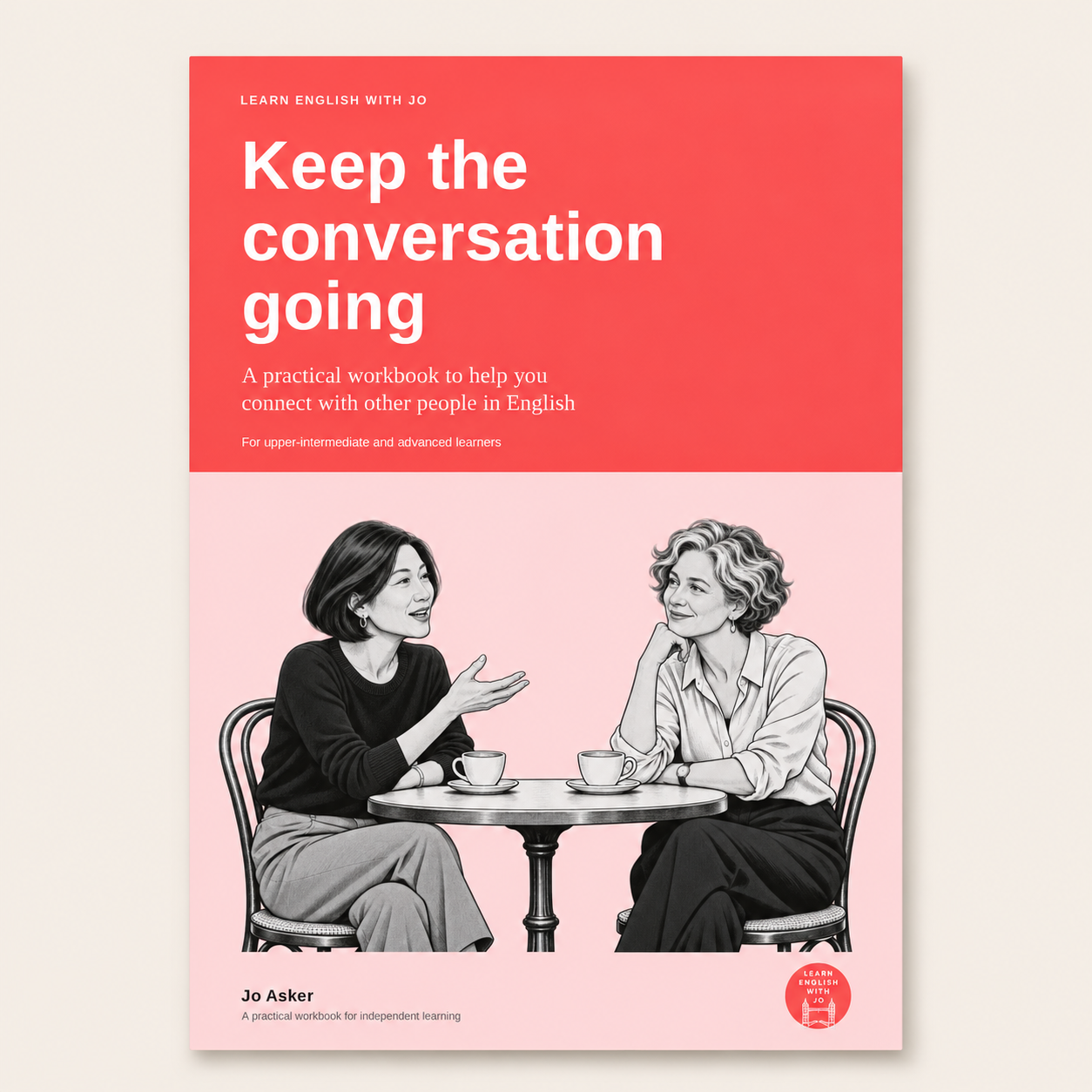
A practical PDF workbook for upper-intermediate to advanced learners who want to feel more comfortable keeping conversations going and connecting with other people in English.
Seven guided lessons help you practise responding with interest, asking follow-up questions and sharing something of yourself.
Work through realistic examples, try your own responses aloud and find words that feel natural to you.