
How to Ask for Help in English: 8 Useful Phrases for Real Life
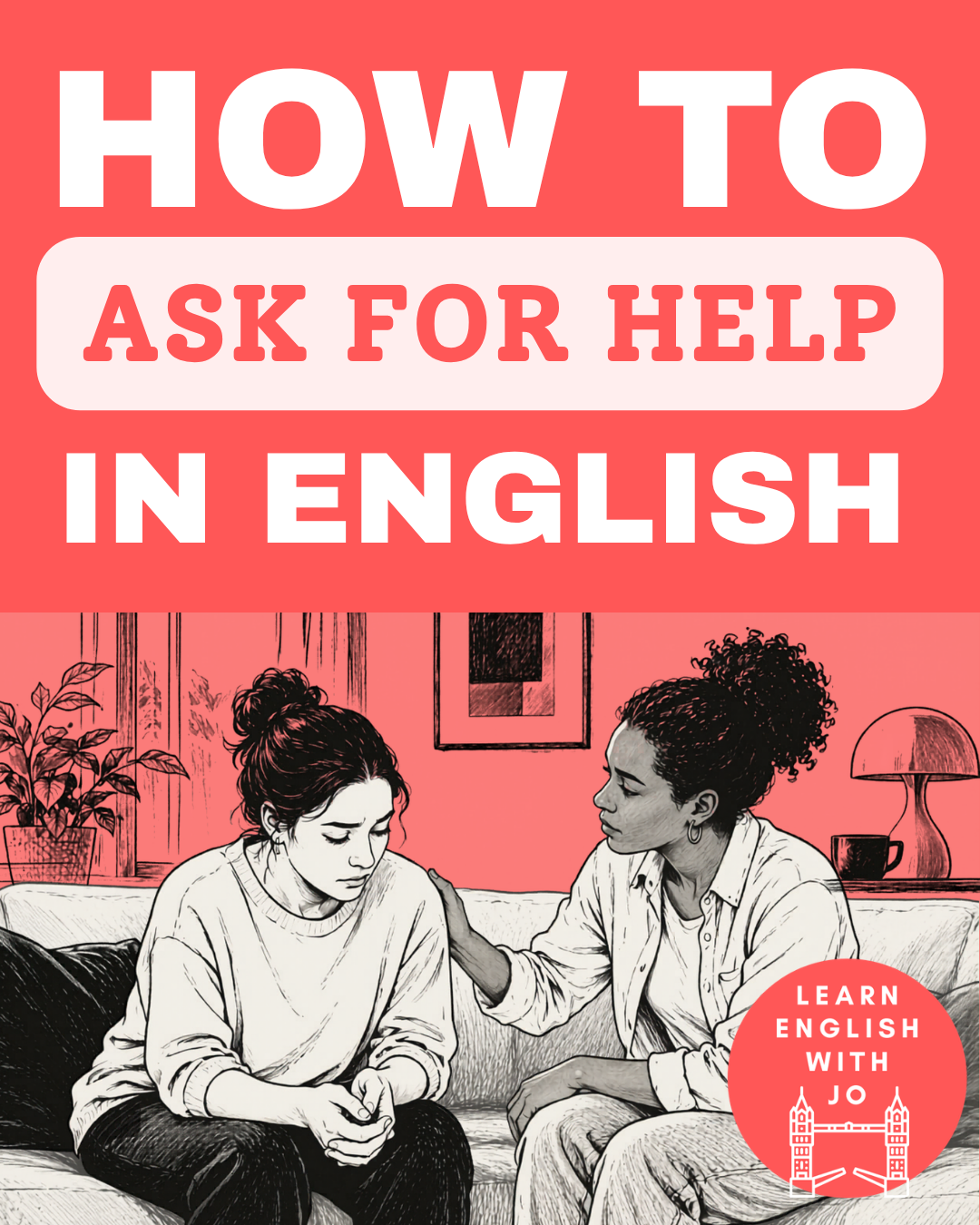
When you are learning English, it is easy to focus only on confident communication. You might think about job interviews, presentations, travel, or sounding fluent in conversation. But English isn’t only for polished moments. We also need it for the more vulnerable, human ones. The moments when we feel overwhelmed, unsure what to do, or simply in need of support.
In this post, I want to share eight natural ways to ask for help in English. These are the kinds of phrases that can help you speak honestly, ask for support politely, and communicate like a real person in a real situation.
Why it matters to learn this kind of language
Many English learners are taught how to ask for information, make requests, or give opinions. But they are not always taught how to say, gently and naturally, that they are struggling.
Being able to ask for help is part of everyday communication. It helps you build closeness, express vulnerability, and deal with difficult moments in a calm and honest way. It is also part of resilience. Not pretending everything is fine, but knowing how to reach out when you need to.
So, here are some useful phrases to keep in mind.
1. I’m finding things a bit difficult at the moment.
This is a gentle and understated way to say that you are struggling. It sounds natural and honest without being too dramatic.
You might use it when you want someone to understand that things have been hard, either practically or emotionally.
Example:
I’m finding things a bit difficult at the moment. Could we have a chat?
2. Could I ask your advice on something?
This is a polite and very natural way to ask for guidance. It works especially well if you want someone’s opinion or perspective rather than direct help.
It can also be a softer way to begin a more serious conversation.
Example:
Could I ask your advice on something? I’m not quite sure how to handle it.
3. I’m not quite sure what to do next.
This phrase is useful when you feel stuck, uncertain, or overwhelmed. It shows honesty and vulnerability without sounding overly heavy.
It is the kind of thing people often say when they need help thinking things through.
Example:
I’m not quite sure what to do next, if I’m honest.
4. I could really use a bit of support.
I like this phrase because it feels warm and direct. The word support is a little softer than help, and it can include emotional support as well as practical support.
It works well when you need someone beside you, not just someone to solve a problem.
Example:
I could really use a bit of support at the moment.
5. Would you mind talking this through with me?
This is a very useful phrase when you don’t necessarily want advice straight away. Sometimes you don’t need anyone to fix anything. You just need to say things out loud and feel heard.
This phrase invites that kind of conversation.
Example:
Would you mind talking this through with me? I think I need another perspective.
6. Could you give me a hand with this?
This is a common everyday English phrase for asking for practical help. It is informal, friendly, and very natural.
You would usually use it for tasks, jobs, or situations where you need concrete help with something.
Example:
Could you give me a hand with this? I’ve got a lot on today.
7. I could do with a bit of help.
This is a very British-sounding expression and a slightly softer way of saying I need some help. It suggests that help would be useful right now, without sounding too demanding.
It is one of those phrases that can make your English sound especially natural in conversation.
Example:
I could do with a bit of help, to be honest. Things are rather full on right now.
8. Would it be alright if I asked for a bit of help?
This is a soft, polite phrase for moments when asking for help feels difficult. It sounds careful and considerate, which is often exactly how people feel when they are trying not to impose.
If reaching out feels awkward, this can be a very helpful phrase to have.
Example:
Would it be alright if I asked for a bit of help? I’m just finding things a bit difficult right now.
Asking for help is part of real communication
One of the reasons I wanted to write about this is that language learning is not just about sounding fluent when everything is going well.
It is also about being able to express yourself when life feels messy, uncertain, or overwhelming.
If asking for help does not come naturally to you, you are certainly not alone. For many people, it feels uncomfortable. But having the language for it can make those moments a little easier.